(Listen to the actual debate at http://www.bbc.co.uk/radio/player/p00x8h4d)
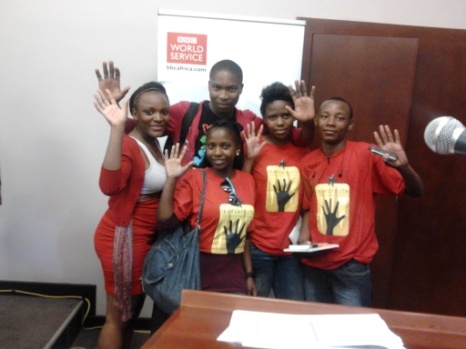
Ikamvanites in Gauteng were invited to take part in the BBC Africa Debate at the University of the Witwatersrand on the 31st of August. The question posed was: South Africa at 18- Does black and white still matter in the rainbow nation? (Unfortunately, due to the nature of the topic and the manner in which BBC radio created the racial references, this article will also be using such terms.)
The debate was hosted by BBC radio presenters, Audrey Brown and Karen Allen, and a panel of speakers selected by BBC in an attempt to represent the “Born Free Generation” as people born on or post 1994. The panel was a strategized mix of Black and White persons from St Benedict’s Private School, Pretoria Boy’s High and Wits Students in an attempt to represent “all” youth. The audience consisted of political party representatives, organisations like Ikamva Youth and academics.
The panellists were divided both racially and with their opinions. However, their opinions were not divided according to race as predicted. Throughout the debate, depending on one’s personal background, circles of influence, experiences and current state of affairs, people felt and saw things differently.
Some youth stated that race does still matter and is still used as a form of identifying and relating to people – finding a commonness (based on cultural, linguistic and socio-economic) amongst a diversified crowd and finding it easier to socialise better with people who have the same social backgrounds. Is this based on the fear of rejection and the need for belonging that most humans feel? On the other hand, as highlighted by the presenters, race is possibly merely used as a code to cover up other issues, such as how race is experienced on a social level. It was great to see that after the debate, the IkamvaYouth learners, also Born Free, interacted with people outside of their normal circle – spreading their horizons.
Some of the issues raised involved nationalisation,education and poverty. A poll was raised and showed that the majority of the attendees were against nationalisation. In terms of the economy, some ‘Born Free’ learners argued that the need is for South Africa to focus on the mines and entrepreneurs to grow the national economy in order to develop society. The issue of shared wealth was then raised and with this race dimensions came up again. A majority of the audience share the view that the majority of poor people are black because the majority of South Africans are black and it is an underdeveloped country – hence the poverty. However, many still see it as: Black people are poor because they are black and financial status is a racial issue construed by the past racial injustices.
Most issues that were given attention were national issues. Policies of Apartheid reformation such as Affirmative Action, BEE and the Constitution were brought up and their role in healing the racial divide were questioned. Unemployment and access to equal opportunities is an evident issue that maintains the gap between the rich and poor. With statistics showing that South Africa has overtaken Brazil GINI ratio – wealthiest. White per capita is 8 times more than black per capita.
This shows that real issues facing South Africans are issues of inequality based on many issues with race only being a structural component created by history and inherently inherited.It was largely seen that differences in race still matters only because South Africans make it matter. All the views of participants were forcibly related to racialism and were rarely from a personal experience of injustice. It seems that society continues to insist on segregation economically, linguistically, geographically and ethnically. One of the audience members noted that: ‘the rainbow colours never mix’, maybe it is inherently human nature to distinguish through separation rather than taking advantage of differences to enhance the whole. There is a shared fear of being different because South Africans were once forced to be different based on race only. The question posed was: when will South Africans stop being forced as well as force ourselves to view one another as Black and White?
IkamvaYouth is at the core at tackling these issues and is a community that is aware, wants to be heard and has the power to make a greater change – The views many Ikamvanites have are from a personal and sincere point of view. These views matter and make issues and discussions more linked to the humaneness of the issues people face on their daily lives.
Ikamvanites, Speak Out! Only you can represent your views with the intensity that they should be viewed. If you feel strong about something – Shout!
Thank you IkamvaYouth for showing us that our voice matters!
Written by Kihisha Suleman (Volunteer in charge of Career Guidance at Ebony Park)
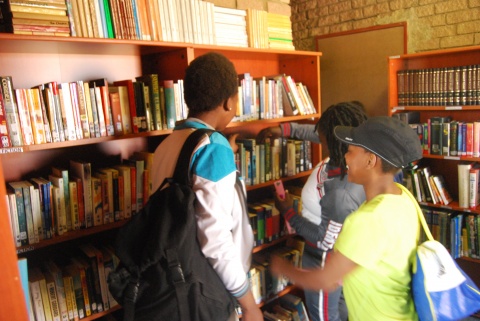
On Saturday, 25 August, Ikamva Youth’s Ebony Park Branch opened it’s own library. It was opened after a ceremony introducing the Ikamvanites to the library and its rules. After watching entertaining videos on the wonder of books, learners made their own bookmarks in anticipation of reading the library’s books. After the ceremony, excited Ikamvanites were allowed to go to the library. For the first time books were taken out of the newly established library. Hopefully this will expose them to the joys of books, establishing a culture of reading at the Ebony Park Branch.
(Ikamvanites deciding which books to take out from the library)
Just over a year ago, Ikamva volunteer Nthabiseng Mokoena realised that the Ikamvanites lacked access to books. After consulting with other volunteers at the Branch, as well as Ikamva employees, she decided to start a library. With a generous donation of book shelves from Robert Barkahuizen, the process of the forming the library began. Nthabiseng, and fellow volunteer Samuel Suttner, collected books from various sources, including family, friends, and fellow Wits’ students. There were considerable donations from Pat Tucker and from the Matla Runners, and assistance from Prof. Bhekizizwe Peterson and the Wits Volunteer Programme.
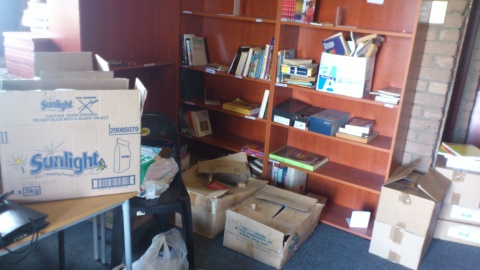
(The library, still a work in progress)
Once the books were collected, the arduous task of setting up a cataloguing system for the library began. With the help of a former librarian, Lucille Katz, and Lucy Verbeek, this was done over many months. They set out the library, categorising and cataloguing the many books
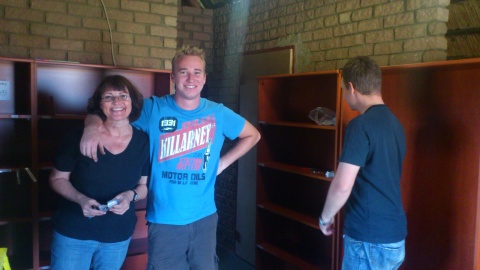
(Lucy Verbeek (left) and her son helping out with the library.)
There was no funding for the library; all the resources for it were donated by people who believed in the importance of having a library for the Ikamvanites. The views of those who assisted with the establishment of the library were expressed by the novelist Zadie Smith: “A lot of people don’t have books on their shelves. The library was the place I went to find out what there was to know. It was absolutely essential.”
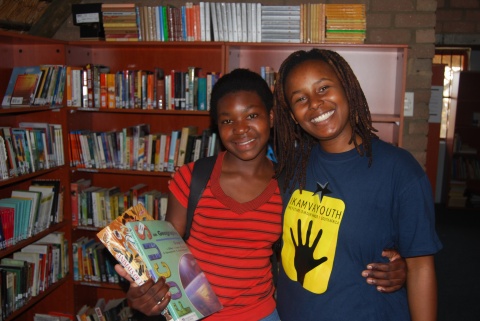
(An Ikamvanite takes out books, with volunteer Nthabiseng Mokoena – right).
We would like to thank the following people for their assistance:
Andrew Barrett; Hlengiwe Radebe; Judy Engela; Karuna Singh; Gill Laburn and the Matla Runners; Lucille Katz; Lucy Verbeek; Nyasha Mutasa; Pat Tucker; Patrick Zimba; Prof. Bhekizizwe Peterson; Robert Barkahuizen; Seth Musker; Stephanie Simpson; Talent Mzili; Thapelo Mokoena; Tiffany Ebrahim; Wits Volunteer Programme, Wits University; Wits Bachelor of Accounting Science, Fourth Year Class of 2012.
Written by Nthabiseng Mokoena and Samuel Suttner
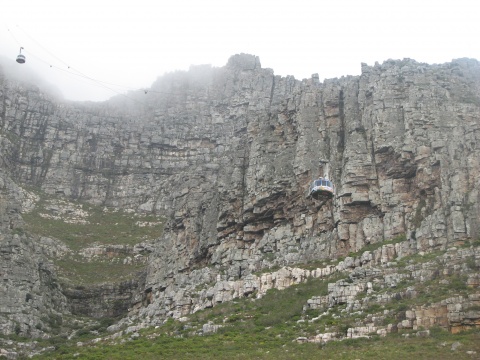
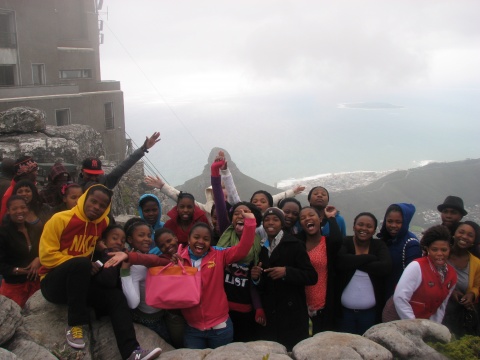
This past Sunday the Masinites hit Table Mountain. Despite the outing being cancelled twice during winter school because of unpredictable Cape Town weather, the learners finally made it to the top of our local natural wonder of the world! Thirty-five learners and several volunteers ascended in the cable car and braved the icy temperatures to explore the top of the mountain. Visibility was not ideal, but the fog did clear enough to take in the stunning views of Cape Town. It was great to have an outing together and reward everyone for their hard work and dedication to IkamvaYouth!
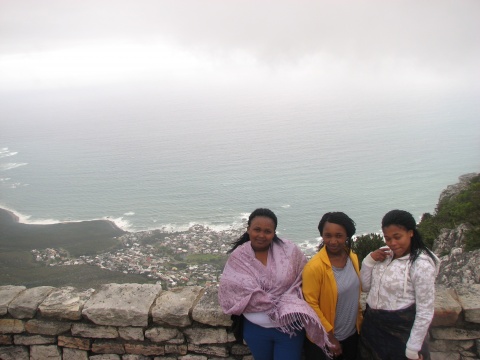
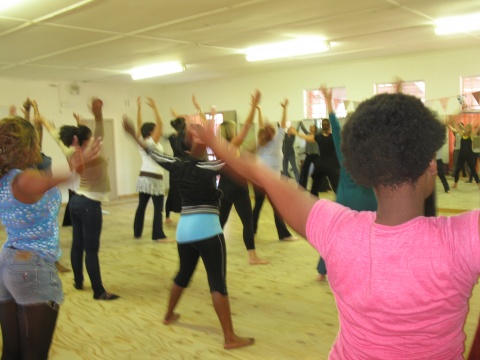
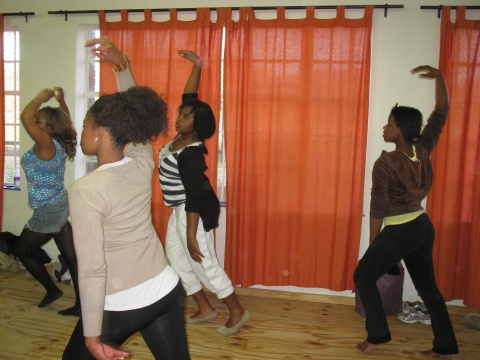
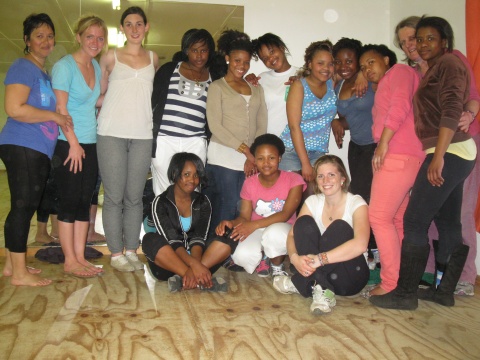
Today the Ladies’ Club from the Masi branch shook, shimmied and sweat in a nia class. The girls went to Ocean View High School to attend a class put on by Maggie Joubert. Nia is a form of cardiovascular aerobic exercise that is done to the beat of music and puts you more in touch with your body. The girls danced, had fun, and got a workout in the process! They loved it so much that plans have been put in the works to make nia a monthly occurrence for the club. Thanks to Maggie for hosting us and we are all looking forward to coming back soon!
Yester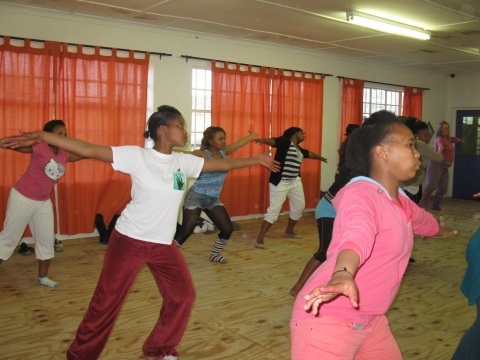
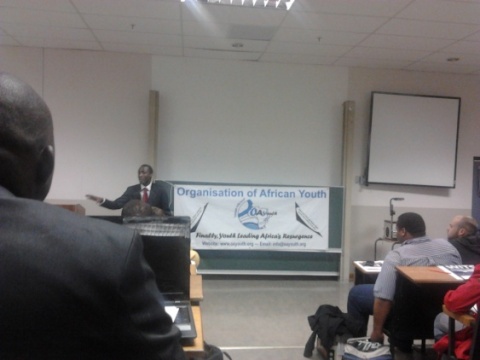
The event, which took place on the 18th of August, was an attempt at creating a platform for the youth as individuals, and representing organisations, to discuss issues and challenges facing South Africa, and contribute in generating solutions. The event was hosted by the Organisation of African Youth, in partnership with the Wits Disability Unit and The Consulting Academy.
The Symposium, the first of many that shall foster platform for the youth to begin setting the agenda and enabling environment to discuss issues affecting the country as a whole, and not remain pedestrian by-standers in issues of national interest. According to the official guest speaker, Patson Malisa,”We (the youth) are the most important component towards the change and revival of the African Continent,”.
As the crowd discussions commenced, the audience still referred to “they” and “I” rather than forming a collective group of responsible youth. Patson highlighted the importance of values such as selflessness and the power of united voice as the youth.
A freelance journalist for Mail & Guardian attended the event and was in search for answers. I took a leap to market IkamvaYouth and told him the importance of the event, and that IkamvaYouth as an organisation consisted of youths that are motivated to resolve issues surrounding the education crisis in South Africa. I informed that the IkamvaYouth model has seen a by-the-youth, for-the-youth revolution in education for all beneficiaries and volunteers.
Representatives of other organisations such as Africa Tycoon and Pretoria Boy’s High provided their perspectives. The lack of leadership was addressed and seen as due to a lack of responsibility and the issues of leaders of the majority being chosen by the minority.
The second issue raised for discussion looked into the gap between the rich and poor. I personally gave insight, stating that the problem lies with a misconception of the meaning of wealth as “What others have that I do not have”. I then provided an alternative school of thought based on the concept of individuals needing to define their own meaning of wealth to attain their personal success. Similarly, one academia stated that the term ‘rich’ must be measured in terms of productivity as that is a true reflection of the attained resources.

The Symposium was a great attempt to a solution driven platform by the youth. While there remains a long way to go in achieving a holistic dimension to contributing to making our country and Africa a better place for everyone, the small efforts of helping one learner at a time as we do at IkamvaYouth is a great step that must never be despised. As the youth, we have what it takes to address all the ills affecting our communities, if only we can be a united front to this end!!
-Kihisha Suleman-
 Lloyd Lungu